
The thing that really got my goat this week.
AI is a massive opportunity to defeat gender stereotypes and yet this gendered nonsense crops up.
I give you exhibit A: The AI “built to think like a woman.” 🤮WTAF. I’m not linking to it for reasons of taste and decency.
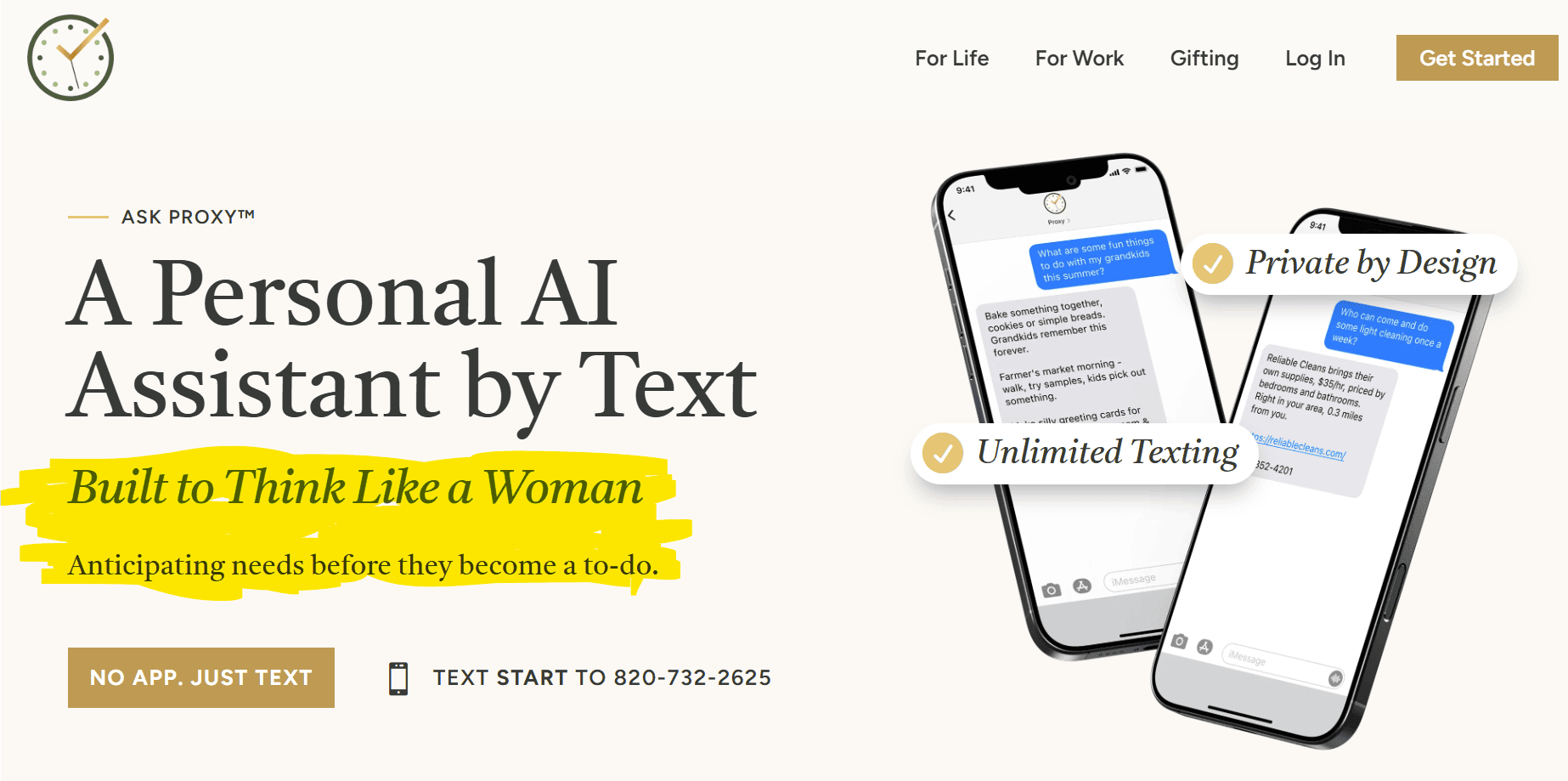
Built to think like a woman? What even is that?
According to Caroline Criado-Perez in the must read (IMHO) book Invisible Women, “Women do three-quarters of unpaid work, irrespective of the proportion of household income they bring in.”
You’d think I’d be cock-a-hoop at tools to help with that.
I’m all for everyone getting AI literacy. And becoming literate in any of the ubiquitous general purpose LLMs will achieve that.
But not using a dumbed down women’s brain menial task version. And, disappointingly, this company has a female founder.
It’s part of a broader trend of people referring to their “AI Wife.” 🤮
Perhaps it’s a Silicon Valley thing? I had to abandon a book by Mo Gawdat, former tech exec, “That Little Voice in Your Head” because about half way through he started talking about the female brain and the male brain, alongside some muddled thinking that people have both types. If everyone has both types, there’s no need for the weird gender stereotyping.
In the same week as discovering Ask Proxy, Melissa Mayer trailblazing ex-CEO of Yahoo gave a badly judged interview to pitch her new venture Dazzle. Much scorn has been poured on her asking AI to tell her three bullet points of why her child was special to give to a teacher. But I’ll have some compassion as this may have been a throwaway remark in a wide ranging conversation and the pile-on was a bit extreme. And it is true that women are using AI less than men.
More broadly though, her framing of Dazzle’s premise also gives me the ick, “Women, this is my own bias, tend to take more photos and are more visual, and so being able to work with A.I. in a visual medium is fun,” Mayer said.
Why such limited tools and why such un-spirational use cases?
As Alexandra Alter, the author of the NYT article wrote,
What’s the alternative view-point on AI for women?
Why shouldn’t women be using these tools to boost their earnings, be entrepreneurs and do more?
Let them take advantage of technology to work from anywhere, build technology, take positions of power, build wealth.
In order to do that, more women need to be driving the AI industry but in ways that address gender bias, not reinforce it. Because technology reflects the bias of the people who build it and the data sets it ingests.
For example, a study of using AI tools in recruitment called “Who Gets the Callback? Generative AI and Gender Bias” showed women were recommended for lower wage roles and fewer women were proposed to be advanced to the next stage.
As Carol Hanisch observed in her iconic 1970 essay titled ‘The Personal is Political’, “Women are messed over, not messed up!”
I feel like I’m having a little Jerry Maguire moment here.
Practical things to take action.
I would love, love, love to have more women on my podcast talking about AI, so if you know someone who’s in a business leading their AI adoption, do make yourself known or introduce me!
And if you’re concerned that your organisation might be baking in bias to its AI tools, let’s talk. That’s one of the things we cover when upskilling leaders to drive AI adoption in their organisations. Email me.
Until next time,
Helen
P.S. Bonus email coming soon with the AI merch you never knew you needed.